
celtic, ireland, eire
writings - celtic
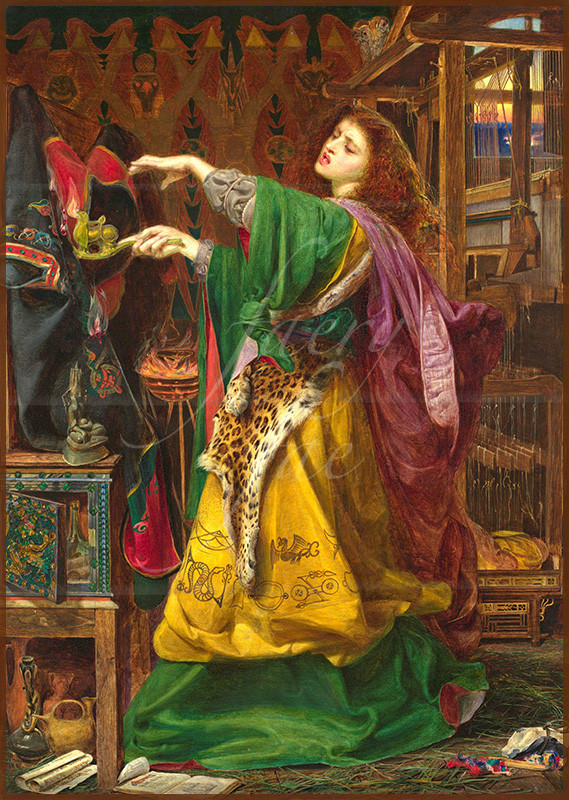
Morgan le Fay
Morgan le Fay (1864)
Frederick Sandys (1829–1904 British)
Of late I have been thinking of Morgan le Fay, the enigmatic fae woven through the tales and versions of the King Arthur and Knights of the Round Table legend. Morgan le Fay (Morgan the fairy) is a very complex character and is at one time or another, pretty much described as everything – contrary, evil, healer, protector, jealous, petty, a sorceress, a sister, seductress, queen, manipulative and the list goes on, describing the full spectrum of fae (and female) characteristics. She is also attributed many feminine traits, and there are layers of interpretation around this. Overall my thoughts have been how Morgan le Fay is representative of the fae in general, all things fae, exhibiting most all their tendencies and actions at one point or another.
More on the Tuatha Dé Danaan
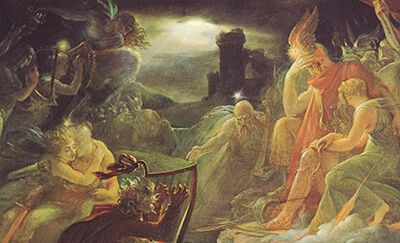
‘Ossian on the Bank of the Lora, Invoking the Gods to the Strains of a Harp’ (c 1800’s)
Art by François Gérard (1770–1837 French)
More About the Tuatha Dé Danaan,
The ‘folk of the goddess Danu’, also known by the earlier name Tuath Dé, ‘tribe of the gods’.
The Tuatha Dé Danaan (pronounced Thoo-a day Du-non) were an ancient tribe inhabiting the West Coast of Ireland from about 1900 bc to about 1400 bc, and are the source…

John O’Donohue
I visited John O’Donohue’s grave a few years back, shortly after he died in 2008. We were in the west coast of Ireland in a little roadside pub in Fanore, County Clare having a guinness looking out at the southside of Galway Bay. We knew he had been buried in the area since it was his birthplace and his family lived around there. Upon finishing the guinness, we asked the owner of the pub if he knew where John was buried, and he smiled and said, oh yea or something like that, and pointed out a window to a small cemetery a quarter mile down the road

The Aesthetics
Image – John Grimshaw (1836 – 1893)
Spirit of the Night, 1879
Sometime back when, somewhere, sitting around a fire with a group of new found friends drinking wine and listening to music some Irish druid had brought along to the gathering, I was sitting next to a guy, and he was sorta wired and overtalking the music to me, going on about the influences of aesthetics and how they powerfully shape our world, like gravity and magnetics and sunlight and water flow and some such other stuff, and I was half listening cause he was so intense about it, and there was other stuff going on like food and the druid dancing with one of the girls and so on. Anyways the party ended…
Black Dragon Tavern –
What Are The Aoi Sidhe and Tuatha De Dannan?
What Are The Aoi Sidhe and Tuatha De Dannan? So here is a second of three videos Black Dragon Tavern has put out about the fae – ‘What are the…

Happiness
Image – Ida Outhwaite (1888 – 1960)
Dancing to the Piper. Published c. 1920’s, Australia
Happiness
Happiness needs invitation.
Choose that which is fun,
feels good, makes you laugh,
and she will arrive at your door,
flowers in hair and hand.
Let her in, embrace her.
Let Happiness fill you…
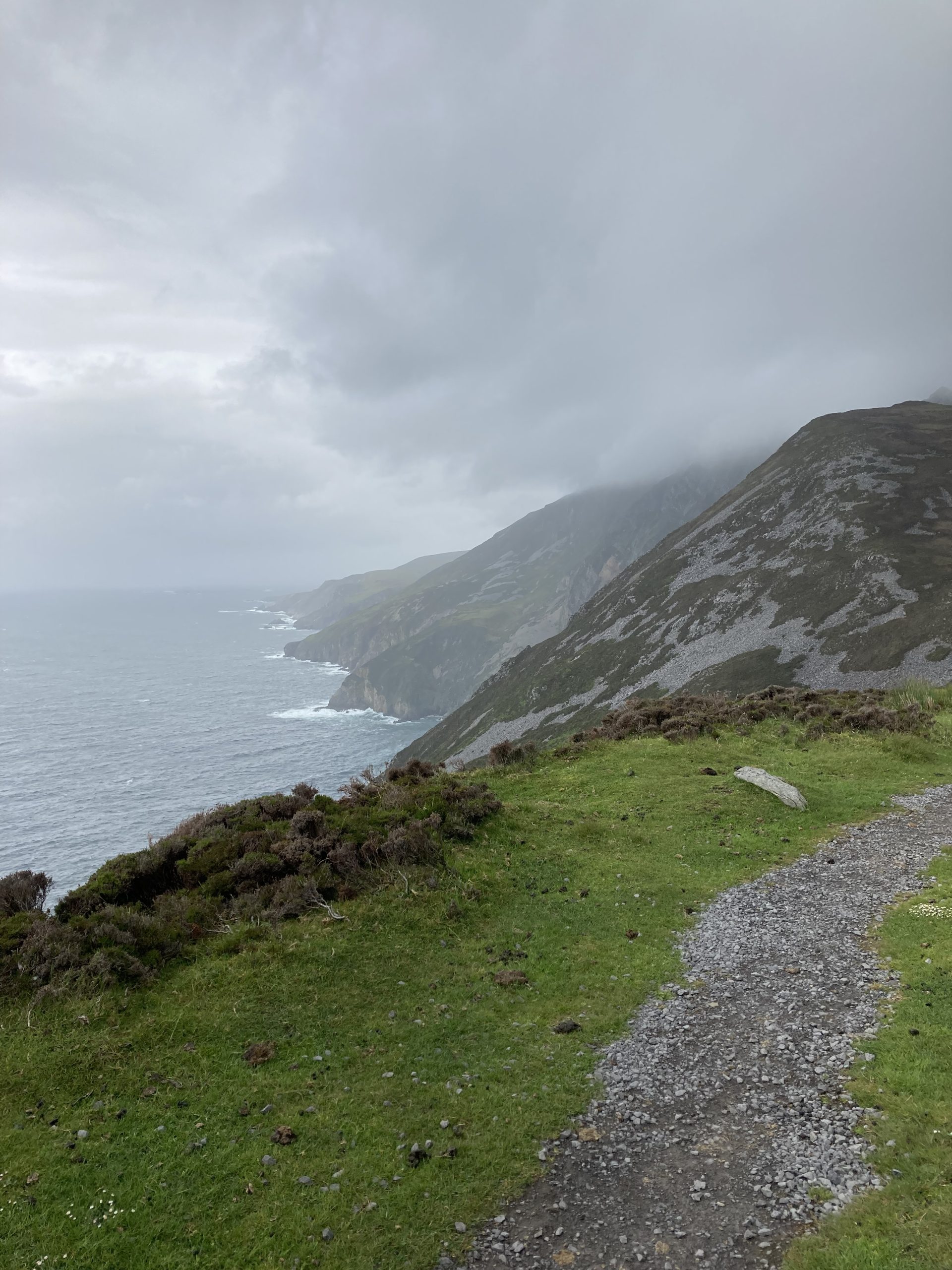
Eire – Goddessland
Image – West Coast of Ireland, present day
In any study, research or reading about fairies, one inevitably ends up with that discussion or study bringing up a number of interlaced themes – magic, the aesthetics, the Tuatha Dé Danann, Celtic influences and Ireland.
The name Ireland is also sometime spelled by an older spelling ‘Eire’. Referring to the richly understanding quote at the bottom of this site by J. R. Tolkien, note the spelling of the word he uses – Faërie, referring to the realm of the fae. Take off the ‘Fa’ and you end up with ‘ërie’, or capitalized, Ërie. The two dots are referred to by the word diaeresis, which is…

Tuatha Dé Danann
Image – John Duncan (1866 – 1945)
The Riders of the Sidhe,
Published 1911
About the Tuatha Dé Danaan,
The ‘folk of the goddess Danu’, also known by the earlier name Tuath Dé, ‘tribe of the gods’.
The Tuatha Dé Danaan (pronounced Thoo-a day Du-non) were an ancient tribe inhabiting the West Coast of Ireland from about 1900 bc to about 1400 bc, and are the source of both the Irish Gods and the origin of fairies. Below is a retelling of their story…

Etomology of the Word ‘Fairy’
Image – Ida Outhwaite (1888 – 1960)
Catching the moon with a string of dewdrops. Published 1926, Fairyland, Australia
Etomology – the study of the origin of words and the way in which their meanings, spellings and usage and have changed over time. It is revealing to understand the evolution of the present day word ‘fairy’, and its more ancient origins. Fairy /feri/ The present word ‘fairy’ is derived from the old Anglo-French word ‘fae’. In turn, the word fae is…