

Night Fairies & Other Fairy Types
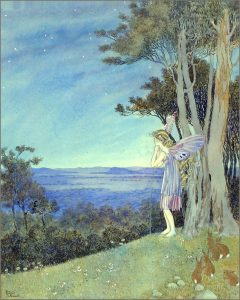
Published ‘The Enchanted Forest’ (1921)
In conclusion of this series of writing about various types of fairies, I am adding a few ‘specialty’ fairies, sub-classes of the elemental fairies for discussion. There are many more than listed here, but this post highlights a few to indicate the many.
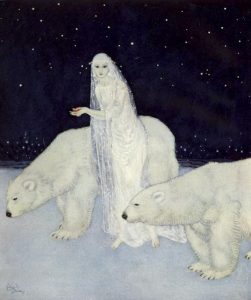
by Edmund Dulac (1882 – 1953 French British)
Published ‘The Dreamer of Dreams’ (1915) Illustration ‘The Ice Maiden’
Ice Fairies – These are a type of water fairy, with a strong dose of the air element. They are also referred to as frost fairies, snow fairies, winter fairies and the like. As the name suggests, they prefer colder climates and are not uncomfortable in low or freezing temperatures. Ice fairies usually keep to themselves, and as their name suggests, their magic consists of things to do with snow and ice, all things frozen. However they can also create a warm pocket, melting ice if it suits them, as they control how cold forms and acts in nature. Alternatively they can also use freezing as a defense.
Night Fairies – As the name suggests, these fairies only come out at night, and are a type of earth fairy. Their primary magic is giving the earth and its inhabitants rest and relief from the glare of the day. They manage the sunset and moonrise, and are generally helpful to those travelling about during the nighttime hours. They are also guardians of night magic, the influence of nighttime and its strengthening powers over various types of magic. They love moonlight. They love starlight. They love all the other special types of light that show or reflect in the dark. They are also known as darkness fairies.

by Wilhelm List
(1864 – 1918 Austria)
Princess Fairies – Otherwise known as queen fairies, fairy godmothers, goddess fairies and similar such callings. Princess fairies are fairies that have no work associated with them. Rather they manage, or govern other fairies. They keep court and expect other fairies to come to them. In return, they listen and insure harmony and cooperation between fairies, and fairies and the human world. Princess fairies also uphold a certain measure of royalty, with high aethestics and expectation. By doing so they enforce and set as example the values of truth, fairness, honor, responsibility and other aligned values.
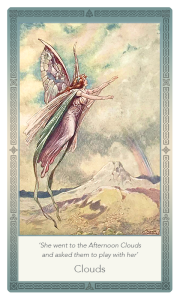
by Frank Henry Watkins
(1863 – 1929 English)
Craft Fairies – These are earth fairies, with a knack and love of creating from raw materials. There are seven primary magical crafts – pottery, drawing, painting, sewing, jewelry making, writing and baking. There is also tool making of all kinds, and various other types of artistic creations. The term ‘craft fairies’ also turns around into ‘fairy crafts’ but that is a different exercise. To clarify, ‘fairy crafts’ can be made by ‘craft fairies’ but most ‘fairy crafts’ are not necessarily and probably not made by ‘craft fairies’. The original Craft Fairies were the Tuath dé Danaan in ancient Ireland, renowned for their craftsmanship of fine tools, weapons and farming equipment.
Other specialty fairies include rainbow fairies, metal fairies (very rare), wind fairies, cloud fairies, primal fairies, sensation fairies, sound fairies, weather fairies and space fairies, along with many more similar type namings.
References –